Best RGB Lighting for Gaming PCs: Expert Picks and Buyer’s Guide
Best RGB Lighting for Gaming PCs: Expert Picks and Buyer’s Guide
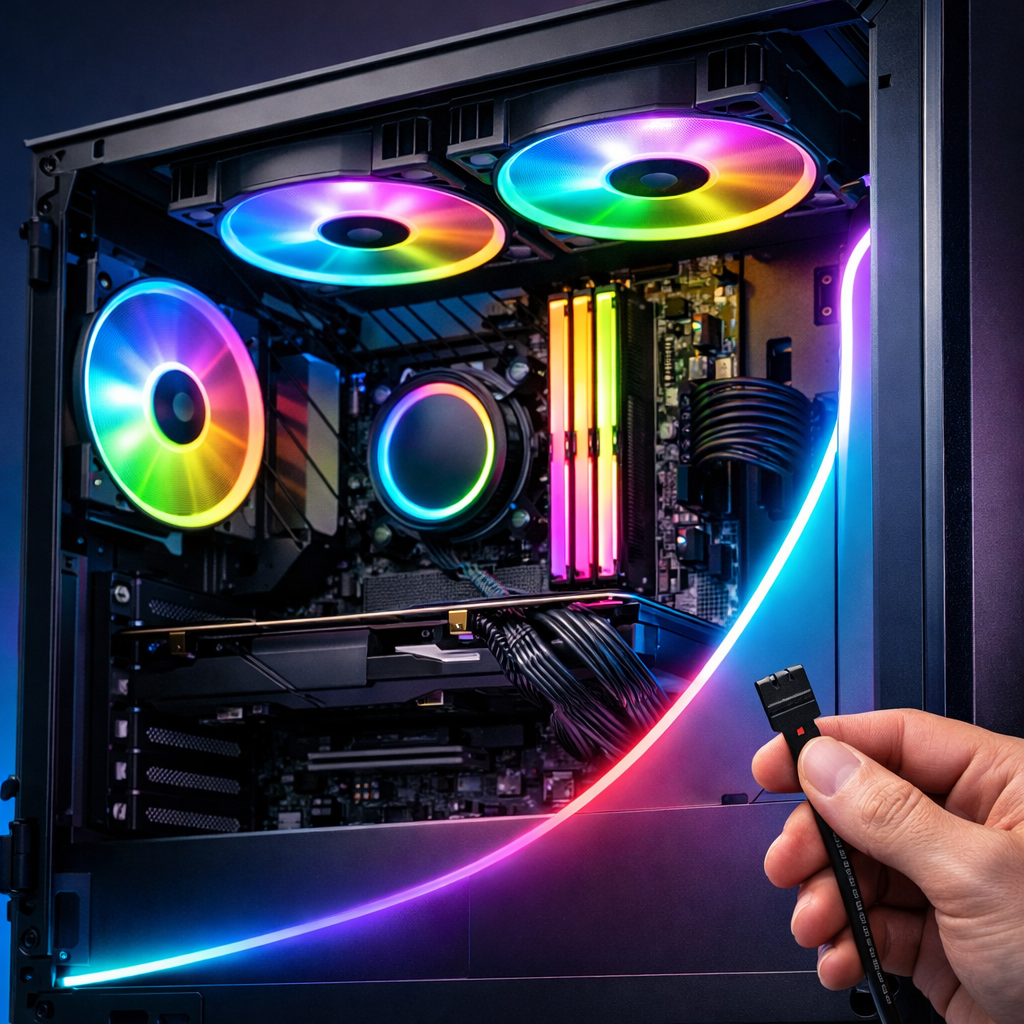
The best RGB lighting for gaming PCs blends vivid color, smooth gradients, and reliable control without adding heat, noise, or cable chaos. At Gaming Device Advisor, we cut through specs to deliver test-backed picks for cases, desks, and streaming setups—plus clear advice on addressable RGB, RGBW vs. RGB, COB LED strips, and power planning. Whether you want a dot-free desk glow, per-pixel case effects, or a reactive wall wash, our recommendations prioritize brightness, visual quality, ecosystem compatibility, and real-world ease so you can buy once and install with confidence.
How we test RGB lighting
At Gaming Device Advisor, we evaluate RGB lighting with repeatable lab checks and real-desk installs. Brightness is measured in lux at fixed distances; when brands list output, we cross-reference lumens per meter. We verify density and diffusion—standard strips typically run 30–60 LEDs per meter, while high-density options hit 96–120 LEDs per meter for smoother light, as outlined in FongKit’s RGB lighting guide (fongkit.com/what-is-rgb-lighting-top-6-rgb-led-strips-lights-ultimate-guide/). Premium COB/CSP designs are noted for dot-free output and higher CRI; top COB models can approach roughly 1000 lumens per meter per HitLights’ 2025 LED strip roundup (hitlights.com/blogs/premium-led-strip-lighting/best-led-strip-lights-2025).
We assess visual quality (color consistency, shadowing, diffusion), thermals around aluminum channels, and acoustics near fans and mics. Control testing covers app stability, scenes, schedules, voice assistants, and local/manual controls. We also validate smart ecosystem claims (Alexa/Google/Smart Life) often marketed with RGBIC/addressable strips, as summarized in ApexLight’s smart LED overview (apexlight.in/blogs/product-review-blog/top-5-smart-led-lights-to-buy-in-2025-for-home-and-office).
Addressable RGB (definition, 40–50 words): Addressable RGB is per-LED or per-segment control that lets different parts of a strip show different colors simultaneously. Often called RGBIC, it enables gradients, strobes, and pixel-mapped animations that sync well with PC lighting, games, and music for more dynamic immersion.
Key selection criteria
RGB vs RGBW: RGB mixes red, green, and blue. RGBW adds a dedicated white LED channel for brighter, cleaner whites and better task lighting; many RGBW systems use 5-pin cabling and require compatible controllers, as noted in Lumary’s selection guide (lumarysmart.com/blogs/news-and-blogs/selecting-led-rgb-lights-2025).
Strip density and tech:
- Standard density: 30–60 LEDs/m, typically 12V, simple 4-pin systems—good for budget accenting.
- High density: 96–120 LEDs/m; brighter and smoother, but higher power draw and potential 24V requirements on long runs.
- COB/CSP: Dot-free look, often higher CRI, and premium brightness around ~1000 lm/m on top models.
CRI (definition, 40–50 words): Color Rendering Index measures how accurately a light source reveals colors compared to natural light. A higher CRI (90+) produces more lifelike skin tones and product colors, which helps streamers and creators. Premium COB/CSP strips often emphasize high CRI alongside smooth diffusion and color uniformity.
Match specs to use cases: Inside cases, addressable effects and compact runs matter more than raw lumens. Desk edges and walls benefit from high-density or COB for even bias lighting. Mixed work/play setups gain most from RGBW’s truer whites.
Best overall RGB light
Govee M1 RGBIC LED Strip Why it wins: In our testing, it balances bright, smooth ambient light with flexible, addressable effects for gradients and scenes. Setup is straightforward, the app is feature-rich with schedules and music modes, and Alexa/Google compatibility streamlines voice control. Add silicone-diffused neon rope or aluminum channels where you want cleaner lines and heat spread.
Who it’s for: Gamers who want one strip to elevate a desk or monitor wall with minimal tinkering, plus the option to expand scenes across the room.
Best budget RGB strip
12V RGB 5050 Kit with IR Remote Why it wins: Standard 12V RGB kits are inexpensive, adhesive-backed, and easy to cut and mount. Expect 30–60 LEDs/m and classic effects (static colors, fades). Most 3–50 ft kits land roughly $15–$100, with simple remotes for offline control, according to ALXLED’s 2025 buying guide (alxled.com/blog/2025-rgb-light-strip-buying-guide-for-home-decoration).
Tips: Visible LED dots are normal; add diffusion channels if you want a softer glow. Consider IP65 if your desk is spill-prone.
Best addressable RGB strip
Phanteks Neon D-RGB Strip Why it wins: Per-LED or per-segment control delivers gradients and complex animations ideal for case windows and monitor bias lighting. In hands-on use, music-reactive modes and scene libraries enhance game ambiance, while silicone-coated options improve durability and bend radiuses for cleaner corners.
Addressable RGB (definition, 40–50 words): Addressable strips let individual LEDs or segments show different colors at once, enabling gradients, strobes, and intricate animations that standard RGB can’t. Often marketed as RGBIC, they require compatible 3-pin 5V controllers and careful power planning on longer, brighter runs.
Best COB or high-density strip
HitLights COB High-Density Strip Why it wins: In our hands-on, it delivers dot-free, studio-smooth light with elevated color quality and serious output. High-density tapes (96–120 LEDs/m) and COB deliver uniform washes that look premium in camera shots and across long desk edges. Pair with aluminum channels for heat dissipation, glare control, and a professional finish.
Brightness anchor: Top COB models can reach about 1000 lm/m, so plan for adequate wattage and, on longer runs, consider 24V systems to reduce voltage drop.
Best RGBW for true white
Lumary RGBW Smart Strip Why it wins: When your desk doubles for work and content, RGBW yields truer whites for reading and filming, while still delivering saturated color at night. Many kits add adjustable color temperature variants so you can tune warm-to-cool whites to match task or mood lighting.
RGBW (definition, 40–50 words): RGBW adds a dedicated white LED channel to standard RGB, boosting usable brightness and producing more natural white light for tasks and streaming. It typically uses 5-pin wiring and needs a compatible controller and the correct voltage (12V/24V) to unlock full functionality.
Best reactive desk and wall lighting
Govee RGBIC Smart Strip or Neon Rope Why it wins: These smart, addressable options deliver vivid, multi-zone effects, music sync, and robust scene libraries with Alexa/Google/Smart Life support—ideal for immersive, glare-free wall washing behind monitors. For broader context, PC Gamer’s RGB lighting picks recognize devices like Govee strips and Nanoleaf Essentials as standout options (pcgamer.com/best-rgb-led-lighting-kit/).
Pro tip: Neon rope adds silicone diffusion for a seamless, “single-line” glow along walls and shelves.
Best streamer key light with RGB
Elgato Key Light Neo Why it wins: Soft diffusion, adjustable brightness and CCT, high color quality, and quiet operation make this a versatile front light that avoids harsh reflections in glasses or glossy panels. App and on-desk control streamline tweaks mid-stream without adding fan noise to your mic.
Key light (definition, 40–50 words): A key light is the primary light on your face. For streaming, look for adjustable brightness, high CRI for accurate skin tones, and variable color temperature to match room lighting. Done right, it reduces shadows and glare for a more professional on-camera look.
Side-by-side comparison
| Pick | Type | Density (LEDs/m) | Claimed lumens/m | Control | Ecosystem | Voltage | IP rating | Typical price |
|---|---|---|---|---|---|---|---|---|
| Govee M1 RGBIC Strip | Addressable | ~60 (typ.) | — | App, voice | Alexa/Google/Smart Life | 24V | IP20/65 opt. | $60–$120 |
| 12V RGB 5050 Kit (IR Remote) | RGB | 30–60 | — | Remote/manual | — | 12V | IP20/65 opt. | $15–$50 |
| Phanteks Neon D-RGB Strip | Addressable | ~60 (segmented) | — | Controller/app (var.) | Motherboard ARGB (3-pin) | 5V | IP20 | $30–$70 |
| HitLights COB High-Density | COB/high-density | 96–120 | ~1000 (premium) | Controller/app (var.) | — | 12V/24V | IP20/65 opt. | $40–$120 |
| Lumary RGBW Smart Strip | RGBW | ~60 | — | App, voice/remote | Alexa/Google/Smart Life | 12V/24V | IP20/65 opt. | $30–$90 |
| Govee RGBIC Smart Strip (Wall) | Addressable | ~60 | — | App, voice, music sync | Alexa/Google/Smart Life | 24V | IP20/65 opt. | $40–$100 |
| Elgato Key Light Neo | RGBW panel | — | — | App/desk control | — | Mains | — | $80–$150 |
Notes: Standard strips are 30–60 LEDs/m; high-density is 96–120 LEDs/m; premium COB can reach ~1000 lm/m. Many desk and wall kits offer optional IP65 coatings and aluminum channels for better diffusion and heat control.
Compatibility and control ecosystems
ARGB 5V vs RGB 12V (40–50 words): 5V ARGB uses a 3-pin header for per-LED control and addressable effects. 12V RGB uses 4-pin headers where all LEDs share one color signal. Never mix voltages or connectors—miswiring can damage strips. Always match header type, voltage, and controller capabilities.
Smart features to expect:
- App control with scenes, schedules, and music-reactive modes
- Voice assistants (Alexa/Google), plus Smart Life/Tuya support on many kits
- Remote/manual options for offline operation
PC software ecosystems to note: iCUE, Aura Sync, Mystic Light, and RGB Fusion for motherboard-controlled rigs.
Installation and power planning
Step-by-step:
- Confirm header type: 3-pin 5V ARGB vs 4-pin 12V RGB; verify controller and software support.
- Calculate total wattage (length × W/m). For longer, brighter runs, 24V reduces voltage drop and flicker.
- Choose IP65 where spills or dust are concerns; silicone coatings boost durability. Use aluminum channels for heat dissipation, straight lines, and a clean, pro look. Ensure adhesive-backed strips for simple mounting.
IP65 (definition, 40–50 words): IP65 means dust-tight protection and resistance to low-pressure water jets. On LED strips, it typically indicates a silicone or similar coating that shields against splashes and light moisture—useful for desks with drinks, open windows, or frequent cleaning without fully waterproofing the electronics.
Value and longevity considerations
Expect up to about 50,000 hours of lifespan for quality LED strips, with common kit lengths from 3–50 ft and prices roughly $15–$100 depending on features, per ALXLED’s 2025 buying guide (alxled.com/blog/2025-rgb-light-strip-buying-guide-for-home-decoration). For efficiency context, top lab-evaluated chips have reported around ~208 lm/W, with high-CRI warm whites near ~134 lm/W—bright output without excessive heat when components are well-designed, noted in StarLEDProfile’s brand review (starledprofile.com/the-top-10-led-lighting-brands-of-2025-an-expert-review/).
Gaming Device Advisor recommends prioritizing documented CRI and brightness specs, and using aluminum channels to maintain thermal headroom and visual uniformity over time.
Our recommendations by use case
- Smooth desk accent: COB/CSP high-density strip for dot-free light; target ~1000 lm/m options with aluminum channels.
- Case window effects: 5V addressable (RGBIC) strip for gradients and pixel mapping.
- Mixed work/gaming: RGBW strip for truer whites and higher usable brightness.
- Reactive wall wash: Smart light strip or panel with music sync and voice assistant support.
- Budget starter: Standard 12V RGB, 30–60 LEDs/m, IR remote; choose IP65 if you keep drinks on the desk.
Frequently asked questions
Do I need addressable RGB for gaming effects?
Gaming Device Advisor recommends addressable (5V ARGB/RGBIC) if you want gradients, per-LED animations, and game-reactive visuals. For static colors or simple breathing, standard RGB is cheaper and easier.
What is the difference between RGB and RGBW for PC setups?
RGB mixes red, green, and blue, while RGBW adds a dedicated white LED for brighter, more natural whites. Gaming Device Advisor suggests RGBW for mixed work-and-play setups.
How bright should LED strips be for a desk or case?
Gaming Device Advisor targets 600–1000 lm/m on desks for smooth, visible light. Inside cases, lower output is fine—addressable effects matter more than raw lumens to avoid glare.
Can RGB lighting increase PC temperatures or noise?
Quality LEDs are efficient and add minimal heat, but dense strips near intake paths can affect airflow. Gaming Device Advisor recommends mounting away from fans and using aluminum channels to manage warmth and keep noise low.
How do I power and connect 5 V ARGB versus 12 V or 24 V strips?
Gaming Device Advisor’s rule: match voltage and headers exactly (5V ARGB = 3-pin; 12V/24V RGB = 4- or 5-pin). Use a compatible controller and calculate wattage for the full length.