Most Durable Console Controller Brands: Tested Picks For Heavy Gamers
Most Durable Console Controller Brands: Tested Picks For Heavy Gamers
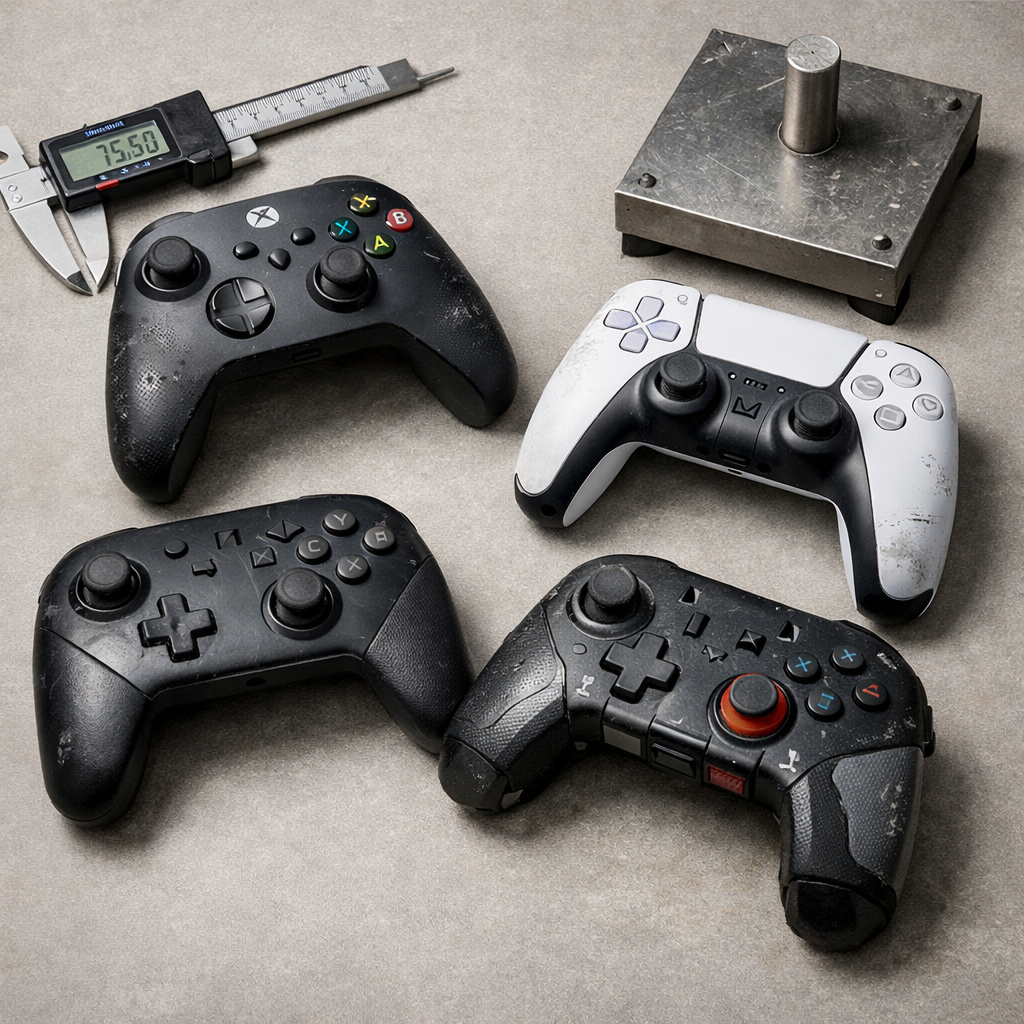
If you play hard every day, the most durable console controller brands pair drift‑resistant sensors with reinforced mechanics and serviceable parts. At Gaming Device Advisor, our testing prioritizes designs using Hall effect or TMR sensors (magnetic position reading) over traditional potentiometers, plus metal trigger hardware, robust shells, and modular stick assemblies. From our hands-on and long-session stress checks, Razer’s Wolverine V3 Pro leads for Hall-effect longevity and low-latency modes, Microsoft’s Xbox Wireless is the best baseline for comfort and compatibility, and SCUF/Corsair pro controllers deliver premium reinforcement and swappable parts. Value buyers should look to GameSir and Gulikit for Hall sticks at lower prices, and consider wired options for simpler, long-term reliability. Below, we outline our testing, what truly predicts lifespan, and the picks we trust for heavy daily use.
How we test controller durability
At Gaming Device Advisor, we simulate heavy play, not just light taps.
- High-cycle inputs: We run accelerated stick rotations and rapid trigger/bumper presses into the tens of thousands of actuations to surface early wear and sensor stability issues.
- Heat, sweat, and grime: Multi-hour sessions with intermittent cleaning test grip adhesion, polymer fatigue, and microswitch consistency under real sweat and skin oil.
- Impact and abrasion: Controlled drops and slide scuffs check shell integrity, seam gaps, and paddle/trigger mount reinforcement.
- Cable and port strain: Repeated plug/unplug and flex tests expose weak USB‑C ports and fragile strain reliefs.
Repairability and serviceability are part of the score. We time stick or battery swaps, verify parts availability (modules, grips, paddles), and grade modularity and screw access versus glue.
We benchmark against market-wide findings. We favor Hall/TMR sensors and reinforced builds because they resist drift and mechanical wear cited across independent reviews and teardowns. To frame the broader context, How‑To Geek’s 2025 guide evaluated 27 controllers and synthesized 33 reviews across the category, which aligns with our priority on long-term reliability and repairability (see How‑To Geek’s roundup for scope and methodology) How‑To Geek’s 2025 best gaming controllers. This helps keep Gaming Device Advisor’s recommendations aligned with broader evidence.
What makes a controller durable
Hall effect and TMR sensors read stick and trigger position magnetically instead of rubbing a wiper across a potentiometer track. Removing that physical contact largely eliminates the wear mechanism that causes stick drift and preserves smooth motion over time, as demonstrated in independent technical overviews and teardowns Hall/TMR sensor explainer (video).
Construction matters daily. Durable controllers use reinforced trigger pivots and paddle mounts (often metal), thicker shells, and modular stick assemblies that you can replace without microsoldering—traits common on premium Microsoft, Razer, and SCUF builds highlighted in enthusiast roundups Best Xbox controllers 2025 discussion. These are the traits we prioritize at Gaming Device Advisor when stress‑testing builds.
Connectivity choices affect lifespan. Simple wired setups remove battery and RF link failure points and rely on cheap, replaceable USB‑C cables. For wireless, user‑replaceable batteries (or AA bays) are easier to keep alive over years than sealed packs.
Our scoring criteria for heavy-use reliability
At Gaming Device Advisor, we weight the factors that predict years, not months, of heavy gaming.
| Factor | Weight | What we look for |
|---|---|---|
| Sensor tech | 30% | Hall/TMR sticks and triggers; stable centering; low deadzone drift over cycles |
| Mechanical reinforcement | 25% | Metal or reinforced triggers/paddles, stout shell seams, durable grips |
| Repairability/modularity | 20% | Tool access, drop-in stick modules, detachable cables, available spare parts |
| Connectivity/battery robustness | 15% | Wired option, user-replaceable battery or proven pack, reliable ports |
| QC track record/support | 10% | Consistent lot quality, clear warranty/RMA, firmware support cadence |
Repairability defined: We assess how safely the shell opens, whether sticks are modular, the ease of swapping bumpers, paddles, and batteries, and whether parts have public SKUs. Controllers with replaceable USB‑C cables and drop‑in stick modules score highest.
Price-to-longevity: Wirecutter pegs good wireless around $40–$60 and decent wired pads at about half; spending more typically adds programmable buttons, Hall-effect sensors, higher polling, and upgraded triggers—features that correlate with durability in heavy use Wirecutter’s controller buying guidance.
Microsoft Xbox Elite Series 2 and Xbox Wireless
Elite Series 2 durability pitch: adjustable stick tension, hair-trigger locks, four paddles, onboard profiles, and a reinforced shell. The built-in battery is rated up to 40 hours per charge in typical use without a headset, and you can swap stick caps and other wear items—features frequently praised in mainstream roundups.
Trade-offs: the sealed battery will eventually age, and while ergonomics are excellent, the sticks use potentiometers, which can’t match the drift resistance of Hall/TMR sensors long-term.
Xbox Wireless/Core remains the default durable pick for many because of comfort, cross‑platform support, and simple AA/pack power. Long-term reports also note that rubberized thumbstick covers can wear smooth after marathon use—worth factoring into heavy‑use expectations Windows Central’s best Xbox controller guide.
Razer Wolverine V3 Pro
Why it ranks: Hall‑effect thumbsticks prioritize drift resistance, and Razer’s hyper triggers offer instant zero‑travel actuation while retaining full analog range when needed. You get wired USB‑C and 2.4 GHz wireless with low‑latency claims suitable for competitive play. PC Gamer spotlights the Wolverine V3 Pro 8K PC as its top high‑end controller, citing premium components and performance tuning that sustain precision over time PC Gamer’s best controllers roundup.
Pricing and positioning: Windows‑focused buyers will see it around $199.99 in retail listings—pricey, but you’re paying for Hall sticks, reinforced mechanics, and dual‑mode connectivity that hold up to daily grind.
SCUF and Corsair pro controllers
SCUF/Corsair (SCUF is now under Corsair) target competitive longevity with reinforced mechanics and serviceable parts. The SCUF Instinct Pro, for example, adds four rear paddles, adjustable instant triggers, and swappable sticks aimed at FPS mains. The durability angle is straightforward: metal hardware and sturdier paddle/trigger mounts better tolerate repeated stress, while modular sticks let you refresh the biggest wear point without a full replacement. Expect a learning curve to squeeze value from instant triggers and paddles, but the materials and modularity justify the premium versus mainstream pads Community roundup of premium Xbox pads.
Third-party Hall and TMR makers: Gulikit, GameSir, 8BitDo
Gulikit popularized modern Hall-effect value pads; the KK3 Max layers Hall sticks and triggers with six‑axis gyro and multi‑platform wireless, making it a smart Switch/PC crossover choice (documented in recent buyer’s guides).
GameSir balances features and price unusually well. PC Gamer named the G7 Pro its best PC controller of 2025, and also called out the Nova Lite as the best budget controller with Hall‑effect thumbsticks—strong signals for durability‑per‑dollar.
8BitDo’s pro controllers are consistently well-built, and newer models increasingly ship with Hall sticks. Look for detachable USB‑C cables and published firmware support to minimize long‑term friction.
Caveat: third‑party QC varies. Favor models with removable stick modules, clear warranty terms, and active firmware updates.
Budget and wired brands: PowerA and wired value picks
Price reality: A good wireless controller typically costs $40–$60, while a solid wired model runs roughly half that. If you don’t need wireless, wired is a durable, low‑cost path that also simplifies repairs (just replace the cable).
QC caution: Owners have reported joystick drift on some PowerA OPS v3 Pro units and trigger‑lock/build issues on early OPS v1 models; budget tiers see higher variance, so weigh warranty length and parts access before buying. If you go budget wireless, prioritize Hall‑effect sticks and documented support histories.
Side-by-side durability comparison
| Brand/Model | Sensor Type | Mechanical Reinforcements | Modularity/Replaceable Parts | Connectivity/Battery | Notable Durability Notes | Price Tier |
|---|---|---|---|---|---|---|
| Microsoft Xbox Elite Series 2 | Potentiometer sticks; digital triggers | Reinforced shell; hair-trigger locks; paddles | Swappable stick caps; accessory kits | Wireless; sealed pack (~40h typical) | Great ergonomics; sealed battery ages over years | Premium |
| Microsoft Xbox Wireless/Core | Potentiometer sticks | Solid shell; standard triggers | Replaceable AA or pack; detachable USB‑C | Wired + Bluetooth/Xbox Wireless; AA bay | Thumbstick cover wear over long use | Mid |
| Razer Wolverine V3 Pro | Hall-effect sticks; analog/hyper triggers | Pro-grade trigger hardware | Detachable USB‑C; replaceable caps | Wired + 2.4 GHz low-latency; sealed pack | Drift resistance from Hall sticks; esports latency focus | Premium |
| SCUF Instinct Pro | Potentiometer or Hall (varies by config) | Metal-reinforced paddles; instant triggers | Swappable sticks; spare parts kits | Wired + wireless variants | Built for repeated paddle/trigger stress | Premium |
| GameSir G7 Pro / Nova Lite | Hall-effect on Nova Lite; G7 Pro tuned for PC | Firm triggers; solid shell | Detachable cables; stick caps | Wired (G7 Pro) / Wireless (Nova Lite) | Strong budget durability; active firmware support | Budget–Mid |
| Gulikit KK3 Max | Hall-effect sticks/triggers | Stout shell; smooth triggers | Detachable USB‑C; modular approach | Bluetooth + 2.4 GHz dongle | Drift-resistant sensors; multi‑platform | Mid |
| PowerA OPS line | Potentiometer sticks | Varies by model | Detachable cables (some) | Wired/Wireless options | Reported drift and trigger-lock issues on some units | Budget |
Notes: Sensor and feature availability can vary by specific SKU or revision—verify before purchase.
Recommendations by platform and use case
- Xbox/PC premium durability: Razer Wolverine V3 Pro for Hall-effect longevity and wired/2.4 GHz low-latency modes that hold up under daily grind.
- Best value baseline: Xbox Wireless/Core for comfort, compatibility, and easy power options; expect eventual grip/thumbstick cover wear on marathon schedules.
- Budget Hall-effect: GameSir Nova Lite. PC-focused favorite: GameSir G7 Pro (excellent wired reliability).
- Switch/PC flexibility: Gulikit KK3 Max for Hall sticks, gyro, and multi‑mode wireless.
- Paddle-heavy FPS mains: SCUF Instinct Pro for reinforced paddles and instant triggers; be ready to maintain pads and triggers as wear items.
- Prefer fewer failure points: Choose wired models with replaceable USB‑C cables and stick modules.
Warranty, repairability, and replacement parts guidance
- Prioritize controllers with replaceable stick modules, thumbsticks, and detachable USB‑C cables—these are the most common, cheapest fixes.
- Favor user‑replaceable batteries (or AA bays) to avoid controller downtime when a sealed pack degrades.
- Before buying, check brand support pages for stick module SKUs, spare paddle/trigger kits, and RMA terms. Premium lines like Xbox Elite and SCUF/Corsair pro models typically publish parts and swap guides.
- Scan community forums and long-term reviews for QC patterns, especially with budget brands that have reported drift or trigger‑lock issues.
These checkpoints mirror how Gaming Device Advisor scores long‑term reliability.
Frequently asked questions
What causes stick drift and how can I avoid it
Drift usually comes from wear in potentiometer-based sticks where physical contacts degrade. At Gaming Device Advisor, we recommend choosing Hall/TMR sticks, keeping thumbsticks clean, and avoiding excessive lateral pressure to reduce wear.
Do Hall effect or TMR sticks really last longer
Yes—Hall/TMR sensors read position magnetically instead of using rubbing contacts, avoiding potentiometer wear and delivering smoother motion and longer life. That’s why Gaming Device Advisor prioritizes Hall/TMR designs in our durability picks.
Is wired more reliable than wireless for long sessions
Often—wired removes battery and RF link variables and uses cheap, replaceable cables. In Gaming Device Advisor’s experience, that reduces failure points during marathon sessions.
How long should a controller last with heavy daily use
With durable sensors, reinforced parts, and good care, 2–4 years of heavy daily use is reasonable. At Gaming Device Advisor, we see premium models with Hall sticks and modular parts exceed that if you replace wear items.
What maintenance extends controller lifespan
Gaming Device Advisor recommends cleaning thumbsticks and triggers regularly, replacing worn grips and cables early, and storing controllers dry. Update firmware, avoid drops, and use a protective case when traveling.